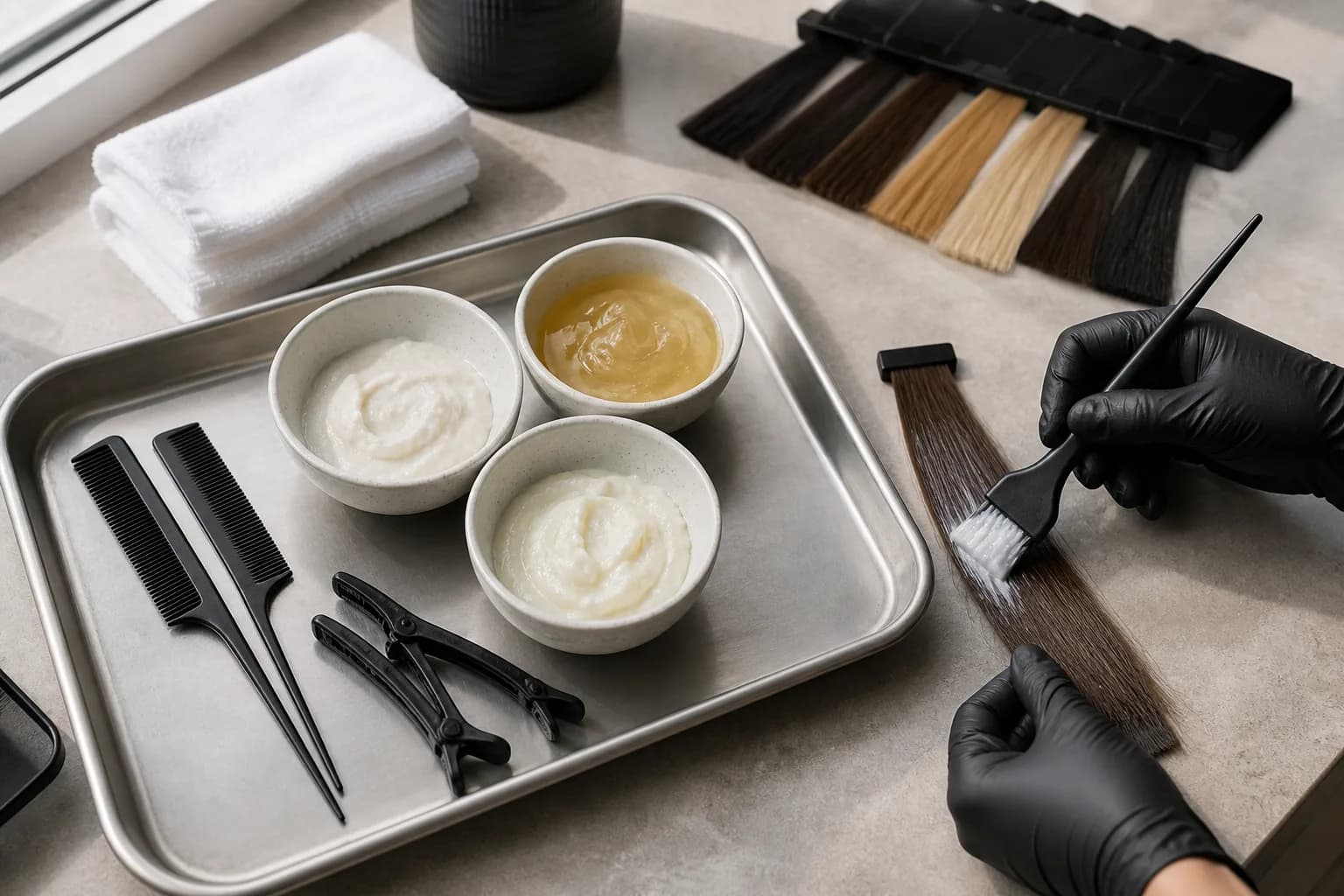
Three different treatment priorities
Hydration, nutrition and reconstruction address different aspects of hair condition. Hydration supports water balance, softness and manageability through humectant and conditioning action. Nutrition is a professional shorthand for replenishing lipids and emollience. Reconstruction uses protein-derived or film-forming ingredients to reinforce the fibre’s feel and reduce visible signs of damage. These functions can overlap, and category names are not standardised across formulations. Behind the chair, we should therefore choose according to the fibre’s history and current behaviour rather than apply all three automatically.
Hydration and nutrition in practice
Hydration is generally considered when hair feels dry, lacks flexibility or becomes difficult to detangle. Humectants interact with water, while conditioning agents help smooth the surface and improve manageability. The result depends on the complete formula, the surrounding humidity and the condition of the cuticle. Nutrition focuses more closely on lubrication and lipid balance. Oils, esters, fatty alcohols and other emollients can improve slip, softness and surface alignment. Some act mainly on the surface, while others interact differently with the fibre according to their chemistry. For salon professionals, the useful distinction is functional: hydration prioritises moisture management, while nutrition prioritises lubrication and emollience. Tyrrel Professional offers Hidratação capilar to distributors, hairdressers and salons.
What reconstruction can and cannot do
Reconstruction is usually considered when chemical processing, repeated heat or mechanical stress has left the fibre weak, porous or prone to breakage. Formulas may contain hydrolysed proteins, amino acids, polymers and conditioning agents that deposit on or interact with damaged areas to different degrees. They can improve body, combability and the way compromised hair behaves during handling. Cosmetic reconstruction does not recreate the original biological structure of the hair, however. Its role is to manage damage and support the fibre’s performance. Excessive use of strongly protein-rich or film-forming formulas can leave some hair feeling rigid or coated, so frequency should follow observed response.
Assess before selecting a treatment
A useful assessment begins with the service history: lightening, oxidative colour, smoothing processes, regular heat exposure and mechanical handling all affect the fibre differently. We can then observe wet elasticity, porosity, surface roughness, tangling, breakage and the way the hair responds after cleansing. No single sign provides the full answer. Dryness can coexist with structural weakness, and a rough surface can reflect damage, residue or insufficient conditioning. Strand assessment and an incremental approach help us distinguish the dominant need without overloading the hair.
Build the treatment plan around the dominant need
When flexibility is stable but the hair feels dry and rough, hydration or lipid-focused conditioning may take priority. When elasticity is markedly altered and breakage is associated with previous chemical or thermal stress, reconstruction may be more relevant. Mixed conditions often call for alternating functions rather than layering every treatment into one session. Cleansing, leave-in care, heat control, tool use and daily handling also influence the outcome. We should reassess after treatment and adjust the plan according to softness, strength, movement, detangling and the requirements of the next technical service.
What varies from one client to another
Fibre diameter, curl pattern, porosity, chemical history, product build-up, water quality, climate and home care can all change how hair responds. For that reason, there is no universal sequence or frequency that suits every client. The appropriate balance depends on the condition observed behind the chair and on the technical services planned. For professionals who want to explore this category, Reconstrução capilar, or hair reconstruction treatment, is the related offering from Tyrrel Professional.